01
Competitors
Solo builders, head-to-head matchups, larger fields or teams.
1v14-wayteamsbucket pull
Turn building into a spectator sport.
Skilled builders enter an arena, receive a challenge, work under visible constraints and race toward an outcome in front of a live audience. The rules can change. The pressure stays.
Build League is not one fixed contest. A match is a set of constraints. Change the field, clock, objective or scoring and the same basic idea can produce very different events.
Solo builders, head-to-head matchups, larger fields or teams.
The time limit defines the pace, from a short sprint to an endurance event.
Everybody can solve the exact same problem or work toward a shared goal with room to interpret it.
Some matches can have an objective finish line. Others end at zero and go to judging.
Internet, tools, hardware and starting material become part of the rule set when they make a match more interesting.
Tests, expert judges, audience votes and sponsor goals can be combined depending on the discipline.
The parent brand stays simple: Build League. Product, design, mobile, cyber and more sit underneath it. None of them is the whole league.
Build a working application, service or feature against a brief and a clock.
Turn the same brand, problem or product into the strongest finished experience.
Native product challenges with devices, sensors and platform constraints in play.
Live attack and defend inside isolated environments.
Game, hardware, and other formats that earn a match.
Builders need to talk, think and operate at full speed without hearing the competitor beside them. The arena should keep them acoustically separated and visually present.
Early events can use existing office phone booths or meeting pods. The long-term visual language is a line of purpose-built transparent acoustic stations facing the crowd.
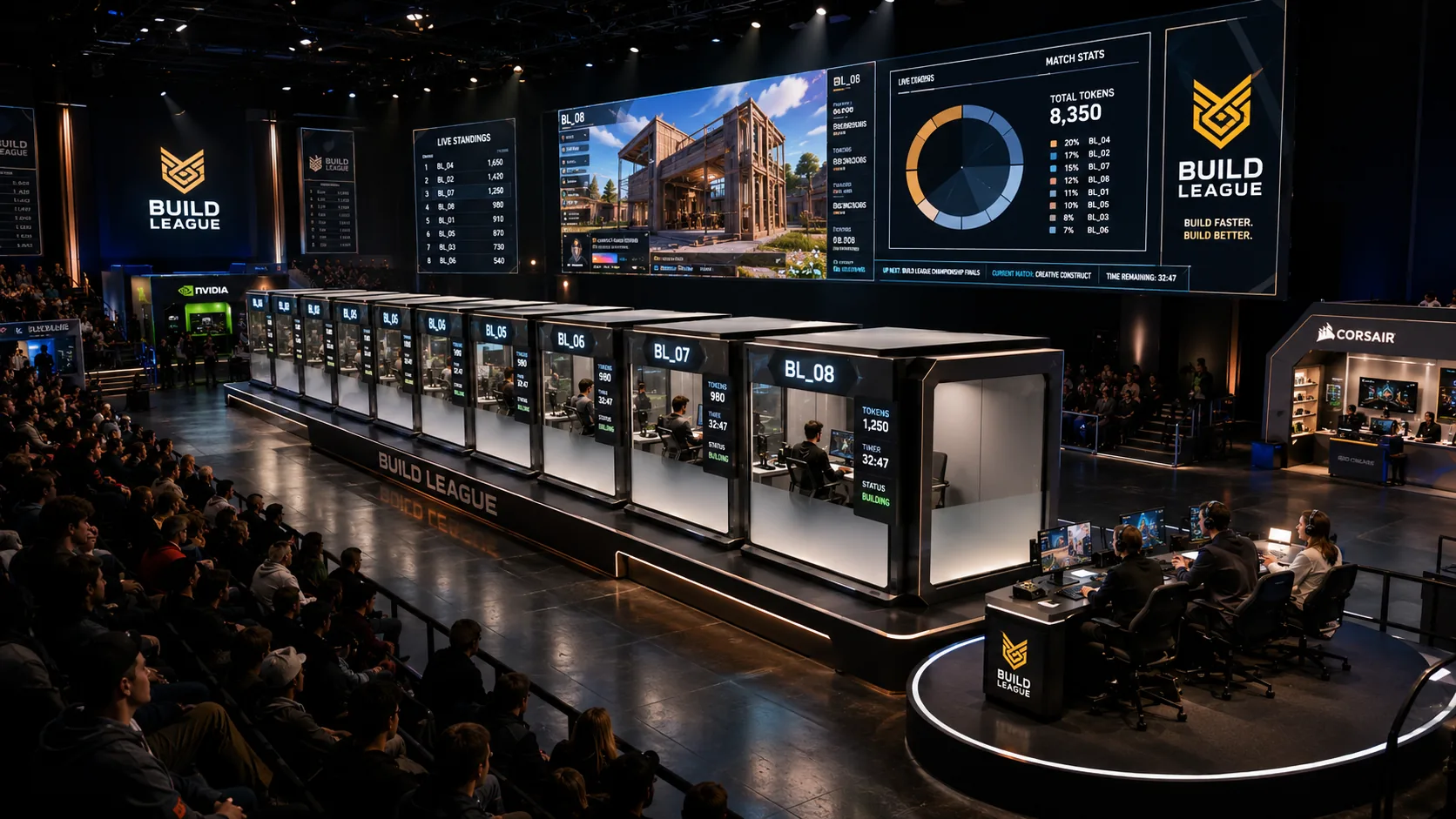
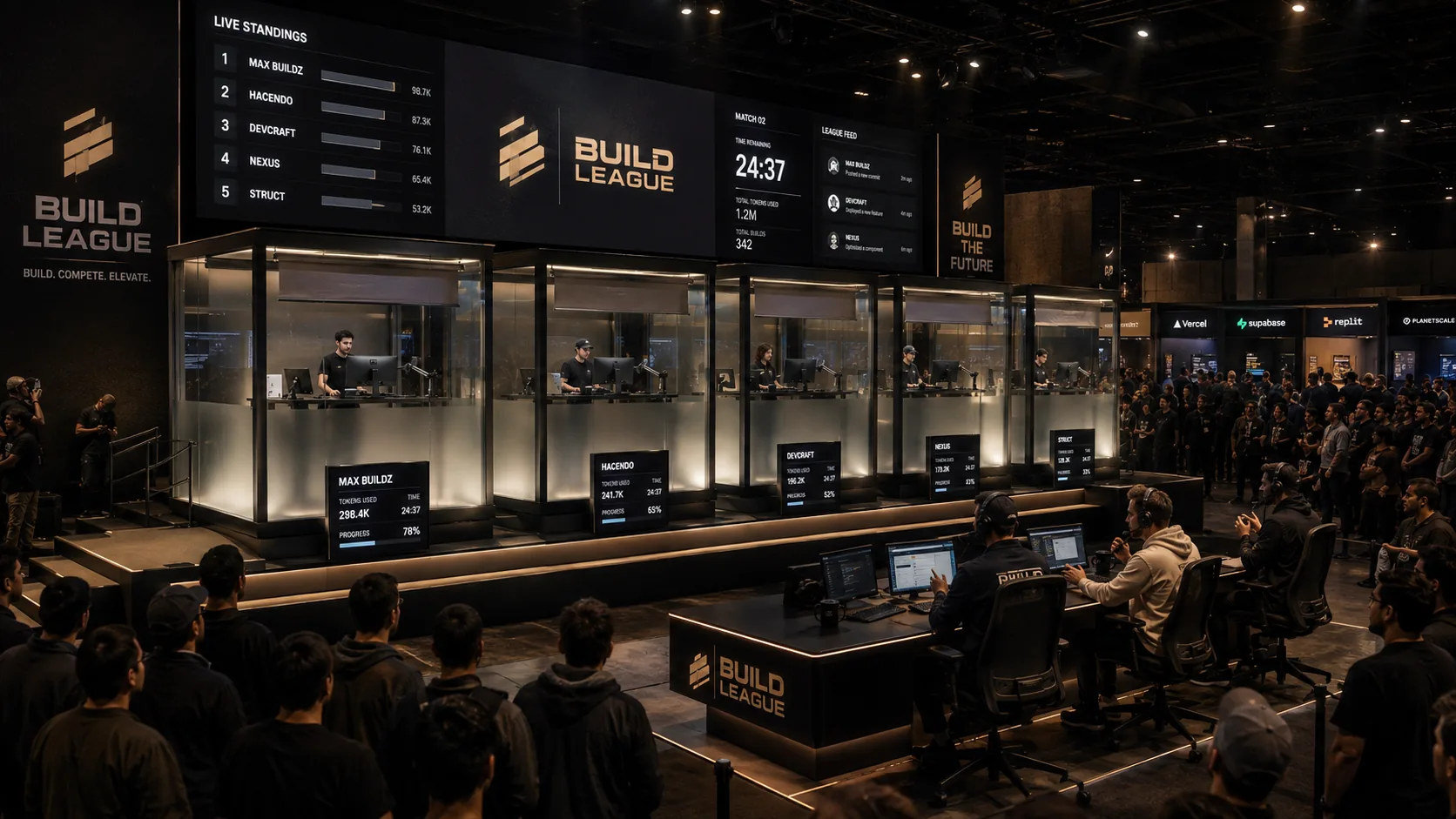
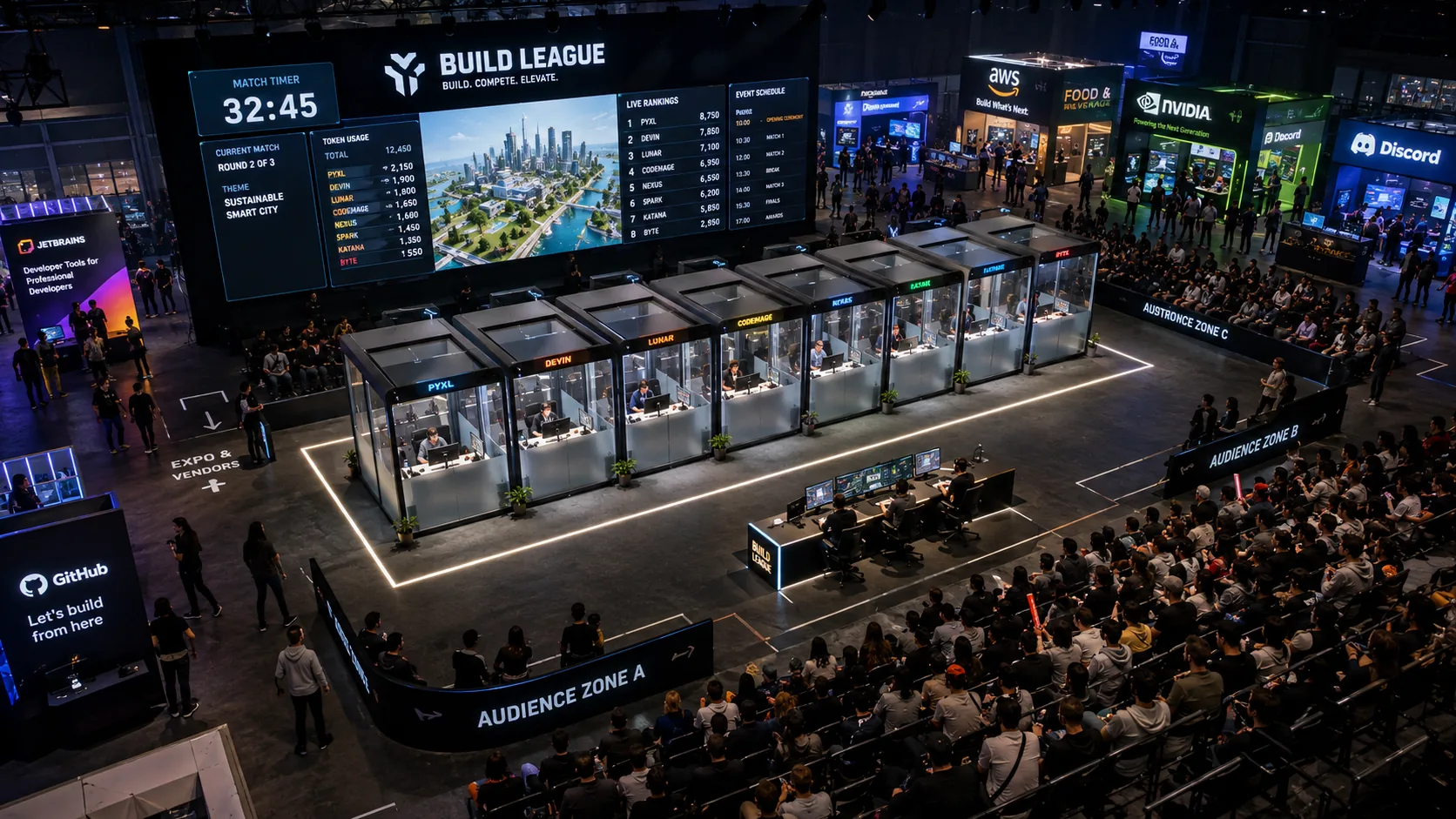
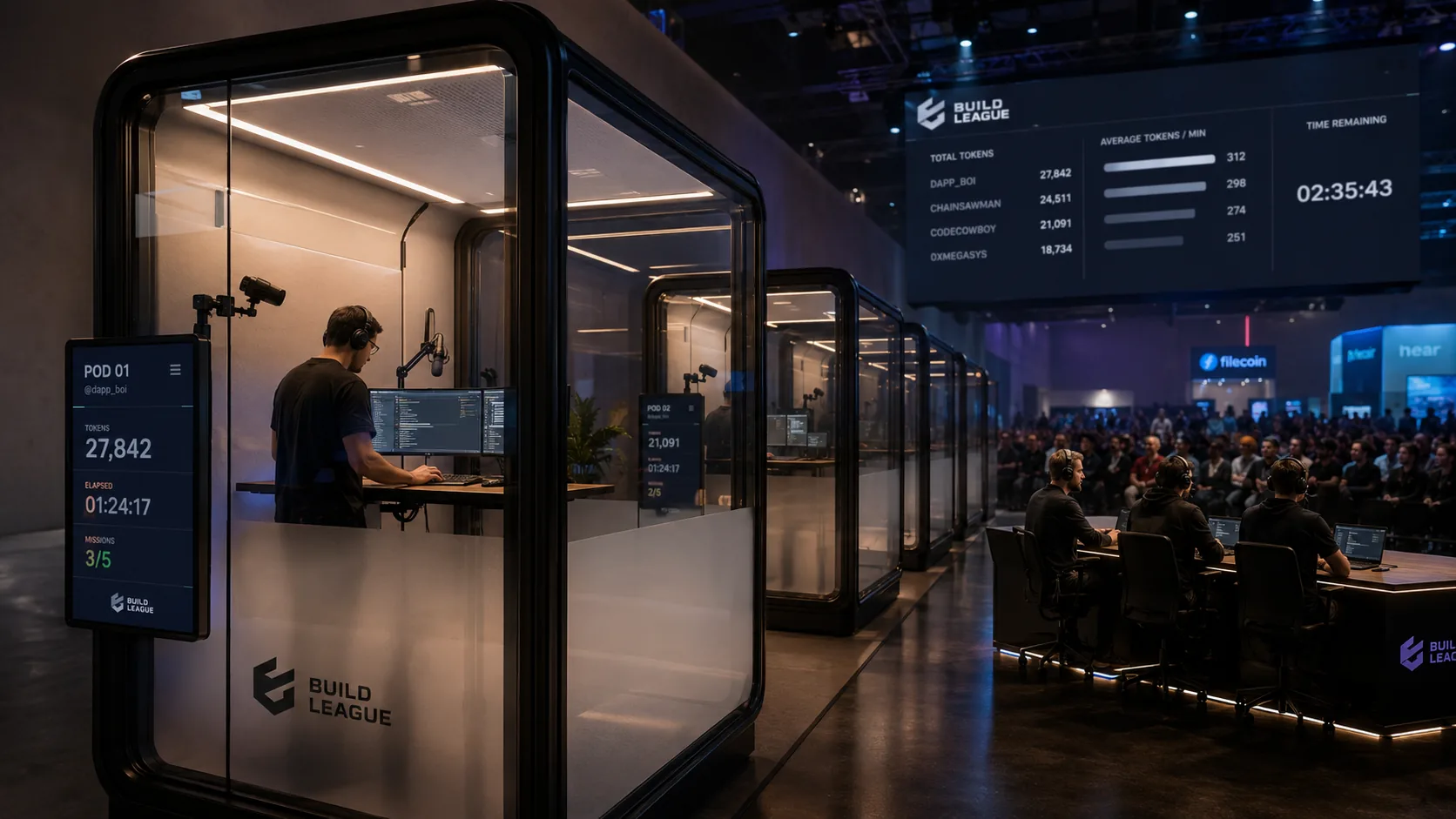
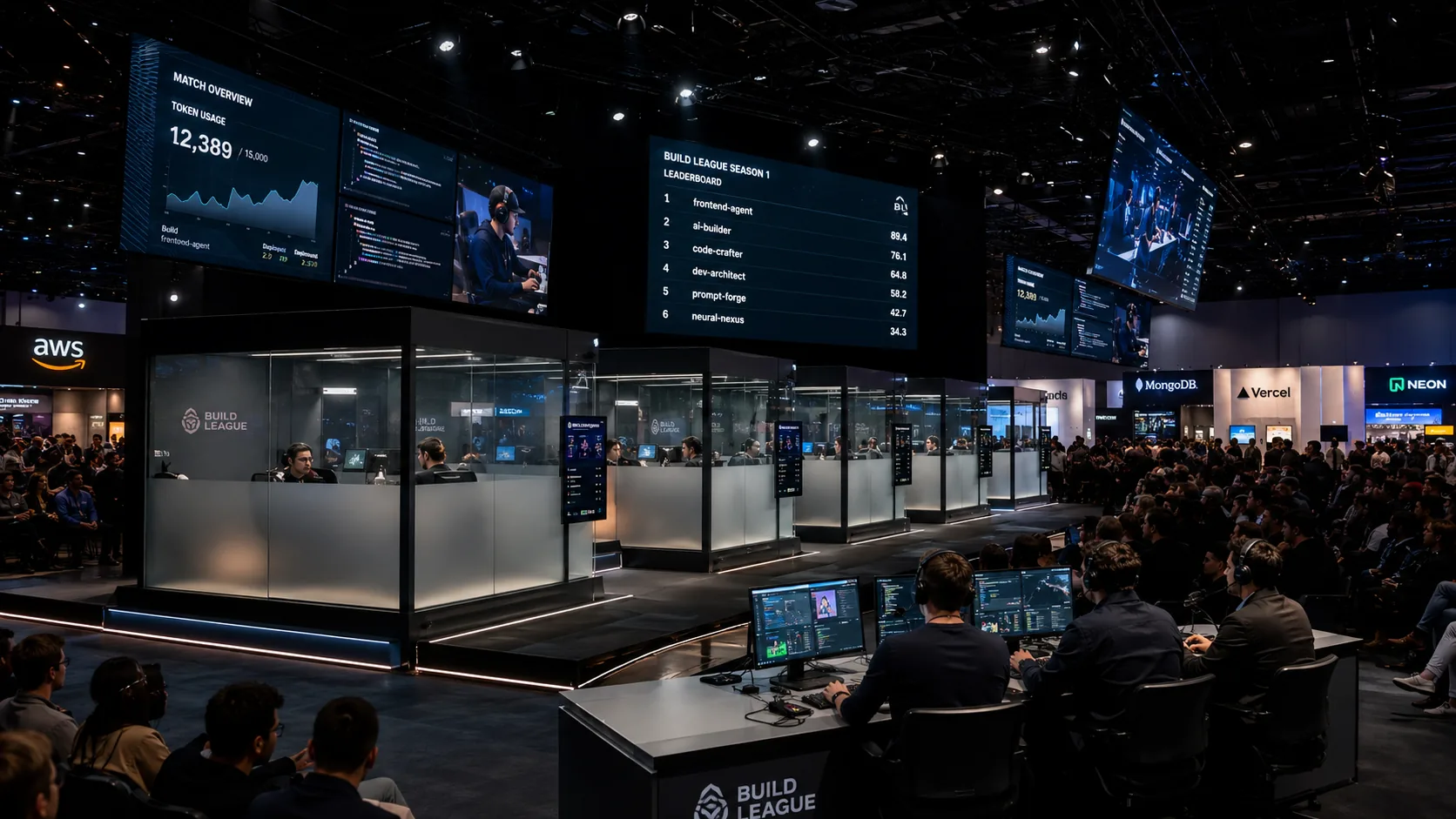
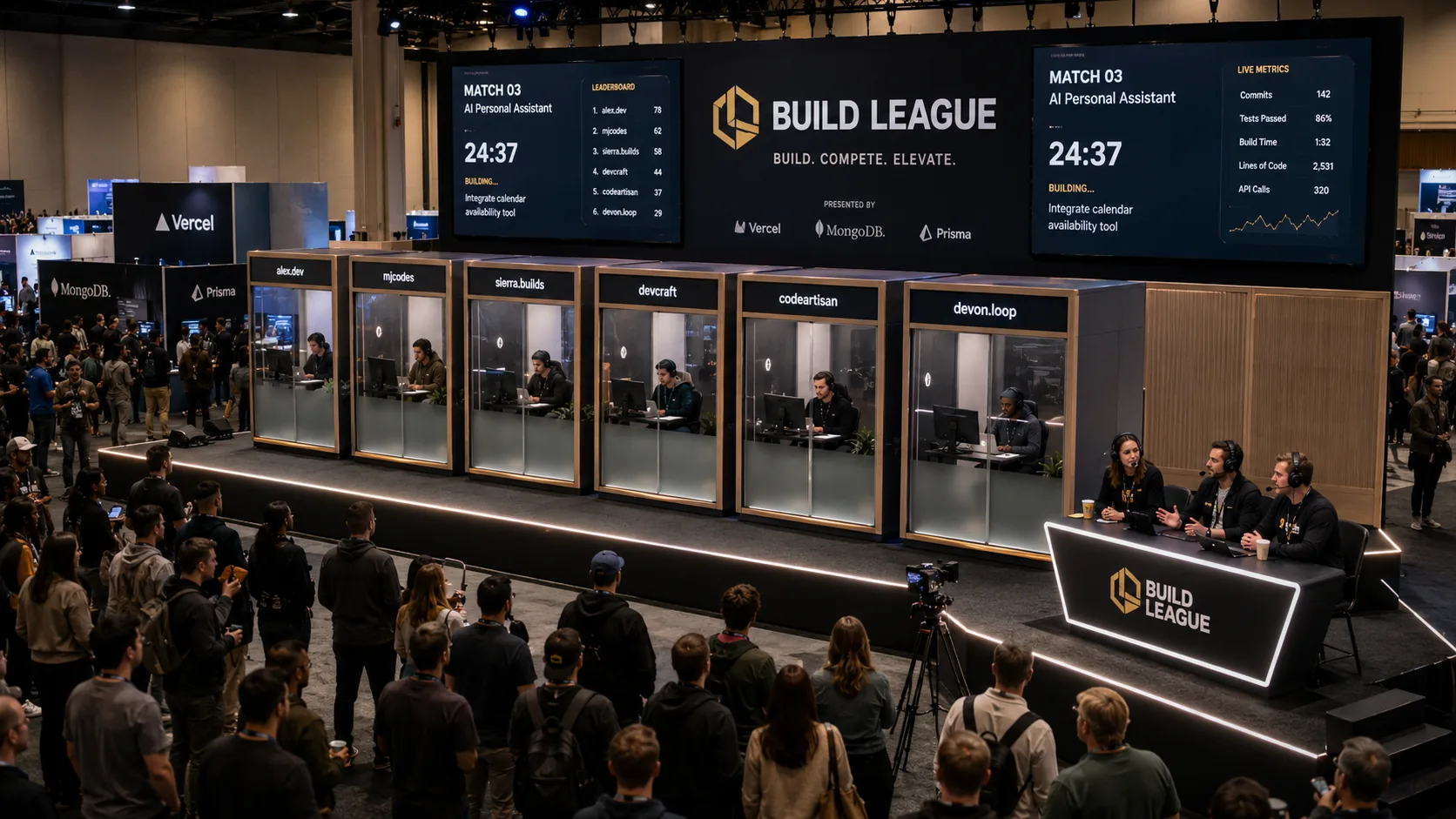
Builders use the environment and workflow that makes them fastest.
Producers choose safe views, running outputs, milestones and cameras. A delay protects secrets and private material.
Giant screens carry the live products, the jumbotron and the most interesting action rather than dumping every desktop at once.
A room full of people silently watching desktops is not the goal. The event needs a production layer that turns decisions, progress and momentum into a story. The jumbotron is part of that story: tokens, stack, tests and deploys the room can actually read.
Commentators explain what the board cannot: decisions, stalls, recoveries and why one builder is burning tokens while another is already live.
Votes, predictions, wildcards, challenge modifiers and audience-choice awards can create participation without interfering with the core competition.
A full event day can include sponsor booths, demos, food and social areas so guests can move around between matches.
A card can mix disciplines and durations. Show up for one matchup, stay for another, spend the gaps around the venue.
A match can be filled a few ways: invite builders ahead of time, let anyone in the room put a name in the bucket, or mix both.
Show up with a laptop and put your name in the bucket. The crowd watches the draw live. If your name comes out, you compete on the same stage, same clock, same pressure as everyone else.
The people matter as much as the challenge. Over time, builders can develop records, specialties, rivalries and followings. Their employer or team becomes part of the story too.
A builder from Shopify can bring a Shopify crowd. A startup can send its best operator. Independent builders can build their own following. A company can sponsor a builder the way a team sponsors a driver, especially if that person already has an audience. A name pulled from the bucket can become a name people come back for.
Persistent statistics create context between events: wins, fastest ships, judge scores, discipline records, comeback wins, earnings and head-to-head history.
Sponsorship can pay for the early events, but the model can go further. A company can fund a challenge, put its stack on the jumbotron when builders actually use it, or ride a competitor who already has a following.
Put your name behind the card, venue, purse or entire event.
Bring a real problem. A restaurant chain could sponsor a design match for its next web experience. A product company could sponsor a build of the onboarding for their consumer app.
Watch talented people actually execute under pressure. Build League can become a high-signal place to discover and hire builders.
Take space on the floor, demo products, meet the audience and be present across the full day rather than only inside the broadcast.
Builders will hit Convex, Cloudflare, Vercel, OpenAI and the rest of the modern stack live. When the board shows Convex live, that is inventory, not a logo on a wall.
Sponsor a competitor the way motorsport sponsors a driver. Strongest when the builder already has a following. The company rides the person, the feed and the crowd they bring.
The first event does not need to define the league forever. Its job is to prove that skilled people building under visible pressure can hold a room and produce a compelling broadcast.